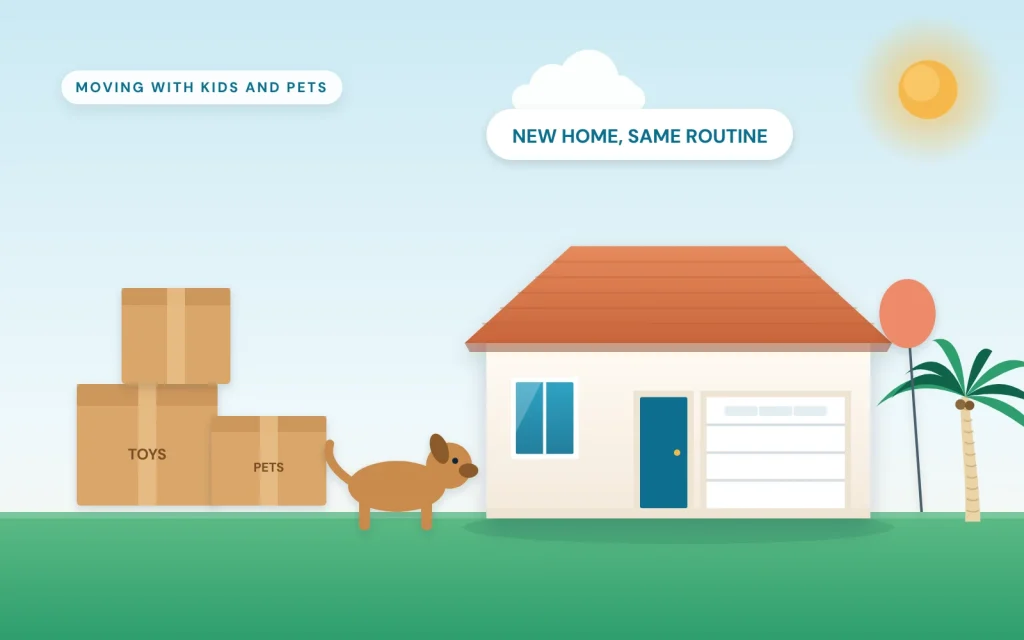
Moving is stressful for adults. For kids and pets, it can feel like the whole world just changed. They didn’t choose the move, they don’t control the schedule, and the familiar places that make them feel safe are suddenly in boxes.
I’ve helped hundreds of families move into new homes across South Florida over the past 20 years, many of them with toddlers, teenagers, dogs and cats in tow. The families who have the easiest time plan ahead, keep routines steady and involve everyone. Here’s how to do that, plus the Florida school and pet rules to handle before you arrive.
A six-week moving timeline
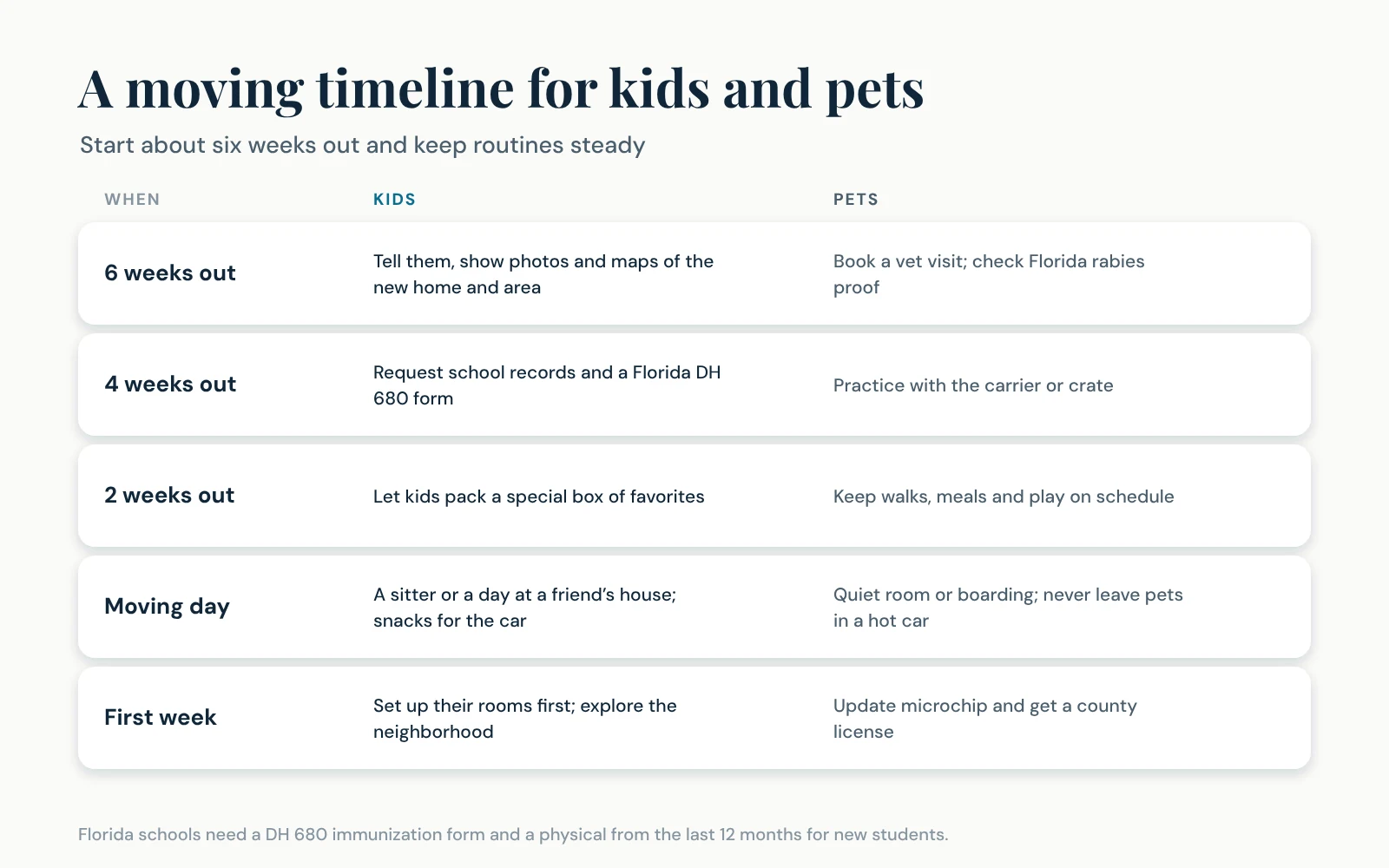
Starting about six weeks out gives children time to adjust and gives you time to handle records, vet visits and school enrollment without a last-minute scramble. If you’re buying new construction, use the builder’s estimated closing date and build in a cushion, since closings can shift.
Helping kids through the move
Tell them early and honestly
Share the news as soon as the move is certain, in words that fit their age. Explain why you’re moving, what will stay the same and what will be new. Answer questions honestly, even the hard ones about leaving friends.
Make it an adventure
Turn the weeks before the move into a countdown. Look at photos and maps of the new home and neighborhood together. Find the closest park, beach, library and ice cream shop. Let younger kids decorate their moving boxes, and let older kids pick a paint color or a bedding set for their new room. If you’re buying a home that’s being built, visit the site together and take photos as it goes up.
Give them a job
Kids handle change better when they have some control. Let them pack a special box of favorite toys, books and comfort items that rides in the car with you and gets opened first. Older kids can help research activities, sports leagues and clubs in the new area.
Help teenagers adjust
Teens often have the hardest time because their friendships and activities are such a big part of who they are. Acknowledge that the move is hard and that their feelings are valid. Involve them in decisions where you can, like choosing their room. Help them stay in touch with old friends through video calls and visits, and point out what’s exciting about the new place, from beach days to new teams and programs. Then be patient. Settling in can take months, not weeks.
Handle school enrollment early
Florida has specific health requirements for students entering a Florida school for the first time:
- A Florida Certification of Immunization, Form DH 680. A Florida health care provider can review your child’s out-of-state records and issue one.
- A record of a school entry health exam completed within the 12 months before enrollment. An exam from your current doctor usually works if it was done within that year.
- Proof of address, a birth certificate and records from the previous school.
South Florida districts start school in mid-August, so families often try to move in early summer. Each county is its own school district, and assignments depend on your exact address. Confirm the assigned schools before you buy, and read our guide to choosing a neighborhood.
Moving day with kids
If you can, arrange for young children to spend moving day with a sitter, relatives or friends. If they’re with you, pack a bag with snacks, water, chargers, a tablet or books, a change of clothes and their comfort items. Keep meals and bedtime as normal as possible, and plan a small reward or celebration for the first night in the new home.
Helping pets through the move
Before the move
- Schedule a vet visit, get copies of records and refill any medications.
- Get your pet used to the crate or carrier weeks ahead with short trips and treats.
- Keep walks, meals and playtime on the same schedule while you pack.
- Give your pet a quiet safe zone away from the boxes and noise.
- During showings of your current home, take your dog out for a walk or a drive so buyers can tour without worry.
Cats in particular get stressed by change. Leave a few open boxes out for them to explore, and set up a sanctuary room with their bed, litter box, food and water both before you leave and when you arrive.
Florida’s rules for pets
Under Florida rules, dogs and cats 3 months and older coming into the state, including pets traveling with their owners, must have proof of a current rabies vaccination. Privately owned pets traveling with their owners generally don’t need the official health certificate required for pets brought in for sale, but airlines usually do, so check with yours. After you arrive, update your pet’s microchip with your new address and check your county’s animal services website for licensing or rabies tag rules. Birds, reptiles and fish have their own rules; see our guide to moving with birds, reptiles and fish.
On the road or in the air
- Secure crates in the back seat or cargo area, never loose in the car.
- Bring water, a bowl, food, waste bags, a leash, medications and copies of records.
- Stop every few hours for water and a short walk.
- Never leave a pet alone in a parked car. In South Florida, the inside of a car can reach dangerous temperatures within minutes, even in winter.
- Book pet-friendly hotels ahead of time if you’re driving from out of state.
- If you’re flying, check your airline’s rules for cabin and cargo travel, crate sizes and health certificates. Many airlines limit pets in cargo during hot months.
Settling into your new South Florida home
Set up the kids’ rooms first so they have a familiar space right away, and unpack the pet supplies before anything else. Then walk the neighborhood together. A few South Florida specifics matter for families with kids and pets:
- Pool safety. Drowning is a leading cause of death for young children, and Florida’s Pool Safety Act requires new residential pools to have at least one safety feature, such as a barrier, alarms or a safety cover. Add more layers if you have small children. See our guide to pool care and safety.
- Heat. Walk dogs early in the morning or after sunset. Pavement and pool decks can burn paws, and kids need water and shade during outdoor play.
- Hurricane season. From June 1 to November 30, keep a family kit with supplies for kids and pets. Some counties offer pet-friendly shelters that ask you to register ahead of time. Read our hurricane preparedness guide.
- New construction safety. In a new community, watch for nails, debris and open construction areas, and check the HOA rules for fences, pets and play equipment before you add them.
Family-friendly places to look
Families with kids and pets often look for parks, good schools, sidewalks and room for a yard. Popular choices include Pembroke Pines, Cutler Bay and Wellington. If you want a fenced yard with fewer rules, look at communities with no HOA, or browse homes with a pool.
Family moving checklist
- Tell the kids early and share photos of the new home and area.
- Request school records, get a Florida DH 680 and schedule a physical if needed.
- Book a vet visit and confirm current rabies vaccinations.
- Practice with crates and carriers.
- Pack a first-night box for each child and pet.
- Arrange a sitter or pet boarding for moving day.
- Set up kids’ rooms and pet areas first.
- Update the microchip and get any county pet license.
- Childproof the pool and build a hurricane kit.
Frequently asked questions
What do I need to enroll my child in a Florida school?
A Florida Certification of Immunization (Form DH 680), a physical exam from the past 12 months, proof of address and records from the previous school. Check your district’s site for the full list.
Do I need a health certificate to bring my dog or cat to Florida?
Pets traveling with their owners generally need proof of a current rabies vaccination if they’re 3 months or older. Airlines usually require a health certificate, so check before you fly.
How can I help my teenager adjust to moving?
Acknowledge their feelings, involve them in decisions, help them stay connected with old friends and find activities in the new area. Expect the adjustment to take time.
When is the best time to move with school-age kids?
Early summer is easiest, since South Florida schools start in mid-August. That gives kids time to settle in before the first day.
How do I keep my pet calm on moving day?
Keep your pet in a quiet room with familiar items, or use a trusted boarding facility or sitter for the day. Keep meals and walks on schedule.
Keep reading
- Moving to South Florida: The Complete Checklist
- Packing Tips for a Stress-Free Move
- Your First 30 Days in a New Home
- Miami-Dade vs. Broward vs. Palm Beach
Explore more in Moving to South Florida.
Written by David, a licensed real estate agent with 20 years in the business. Updated November 2026.