HOA vs. CDD in Florida: Fees, Rules and Gated Communities Explained
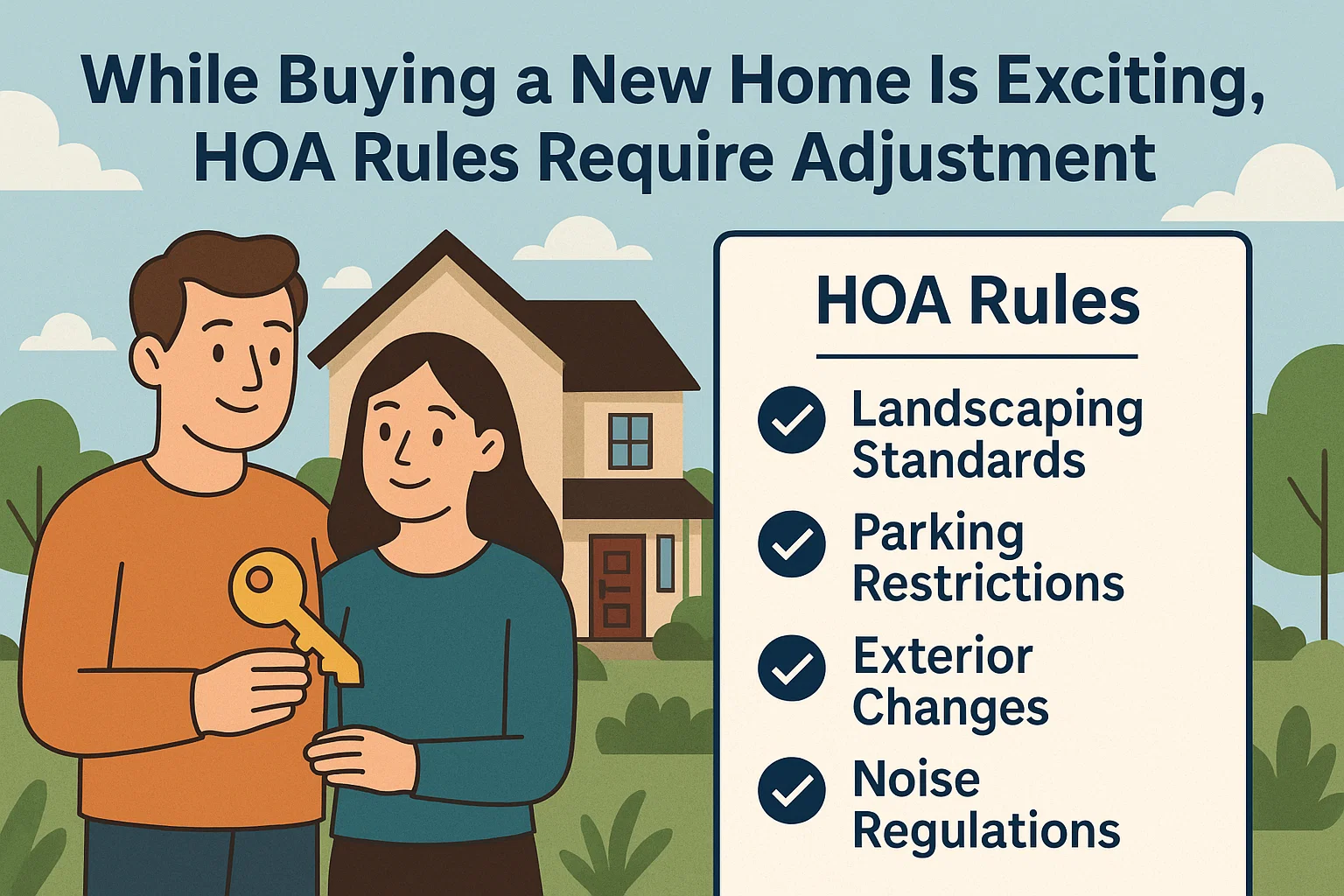
Almost every new home community in South Florida comes with a homeowners association, and a lot of master-planned communities add a Community Development District on top. HOA vs. CDD is one of the most common questions buyers ask me, and for good reason: both cost money every year, both come with obligations, and they are easy to mix up until the first tax bill arrives.
Florida has more HOA-governed homes than any other state; a 2024 Florida House staff analysis put the share at about 45% of homes. So whether you buy new or resale, you’ll probably live with one. This guide explains what an HOA and a CDD each are, how to find the real numbers before you sign, which rules a Florida HOA can and can’t enforce, and whether a gated community is worth the higher dues.
HOA vs. CDD: the quick difference
An HOA is a private nonprofit corporation that maintains the common areas and enforces the community’s recorded covenants. You pay it dues directly. A CDD is a special-purpose unit of local government created under Chapter 190 of the Florida Statutes. It sells tax-exempt bonds to pay for infrastructure such as roads and drainage, then collects assessments on your property tax bill to pay off those bonds and maintain what it owns.
| HOA | CDD | |
|---|---|---|
| What it is | Private nonprofit association (Chapter 720 for single-family and townhome communities) | Special-purpose local government (Chapter 190) |
| What it pays for | Common-area landscaping, amenities, gate staff, management, insurance on common property, reserves | Roads, drainage and stormwater, water and sewer lines, entry features, sometimes clubhouses and recreation |
| How you pay | Dues billed by the association, monthly or quarterly | Assessment on your annual property tax bill |
| How long | As long as the community exists | Debt portion until the bonds are paid off, often 20 to 30 years. Maintenance portion is ongoing. |
| Rules | Enforces covenants, architectural approval and fines | Little say over your home itself. May set rules for facilities it owns. |
| Who runs it | Builder-appointed board at first, then homeowners | Landowner-elected board at first (in practice, the developer), then resident-elected supervisors over time |
| If you don’t pay | Late fees, liens and, in the worst case, foreclosure | Treated like unpaid property taxes |
What HOA dues cover, and what they don’t
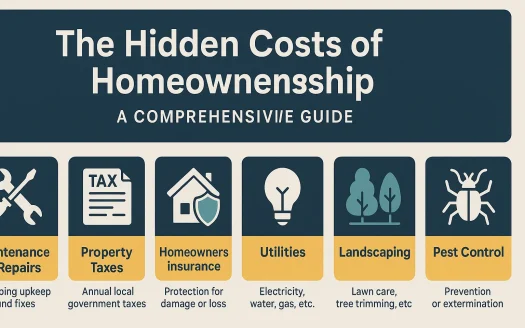
Dues typically pay for common-area landscaping and lakes, the pool, clubhouse and fitness center, gate staff or access systems, a management company, insurance on common property and reserves for big future repairs. Some communities also fold in bulk cable and internet, front-yard lawn care, or irrigation. Your own homeowners insurance, property taxes and any CDD assessment are separate.
What the HOA maintains depends on the type of home:
- Single-family homes: You maintain your house and lot. The HOA handles shared areas and enforces exterior standards.
- Fee-simple townhomes: It depends on the declaration. Some associations take care of roofs, exterior paint and landscaping. Others leave all of it to owners.
- Condominiums: The association maintains and insures the building structure and common elements. You insure the interior of your unit. Our guide to pre-construction condos and townhomes covers how that works.
In a new community, the builder controls the HOA board at first. Under Florida law, homeowners are generally entitled to elect a majority of the board three months after 90% of the lots have been sold to owners. Until then, the builder may guarantee the dues and cover any shortfall instead of paying full assessments on unsold lots. After turnover, dues often rise as owners take on the full budget and start funding reserves. Ask for the current budget and whether the builder is subsidizing it.
How CDD assessments work
A CDD assessment has two parts. The debt service portion repays the bonds that built the infrastructure. It follows a fixed schedule and ends when the bonds are retired. The operations and maintenance portion pays for upkeep of whatever the district owns, and the CDD board sets it each year in a public budget, so it can go up.
Both show up as non-ad valorem assessments on the property tax bill you receive each November, so most owners pay them through their mortgage escrow. That matters in three ways:
- Your lender counts the CDD in your monthly payment, which affects how much you qualify for.
- The homestead exemption reduces taxes based on value. It does not reduce CDD assessments, including under the larger exemption Florida voters approved in November 2026.
- Assessments are often set by lot or home type, so a townhome and a larger single-family lot in the same community can pay very different amounts.
Some districts let you prepay your share of the bond debt, which leaves only the maintenance portion going forward. Builders sometimes offer this at closing. Ask the CDD’s district manager for a payoff figure and compare it with what you’d pay over the remaining term.
Florida requires the builder to disclose the CDD in bold type in the contract for the first sale of a home in the district. Read that paragraph closely. For a resale, look up the parcel on your county tax collector’s website, where the non-ad valorem assessments are listed line by line. Every special district in Florida must also keep a website with its budget, so search the district’s name to see what it spends and plans to spend.
Documents to get before you buy
- HOA disclosure summary. Florida requires sellers to give it to you before you sign. If you didn’t get it, you can cancel the contract within three days after receiving it or before closing, whichever comes first.
- Declaration of covenants, bylaws and rules. These are the actual rules. The sales brochure isn’t.
- Current budget, reserve schedule and recent financial statements. Look for underfunded reserves and planned increases.
- A year of board meeting minutes. They show special assessments under discussion, lawsuits and recurring disputes.
- For resales, an estoppel certificate. It shows what the seller owes and any open violations.
- CDD details. The annual debt and maintenance amounts for your lot, when the bonds mature and whether prepayment is allowed.
- The rules you care about most. Leasing, pets, parking and vehicles, fences, pools, paint colors, hurricane shutters and solar.
Since January 1, 2025, Florida HOAs with 100 or more parcels must post their governing documents and other official records on a website or app for owners. Before closing, ask the builder or seller’s agent to send you the same documents.
What a Florida HOA can and can’t enforce
An HOA can enforce what’s in the recorded covenants and properly adopted rules: architectural approval for exterior changes, paint colors, fences, landscaping standards, parking, pets, leasing, trash, signs and use of the amenities. Before a fine sticks, Florida law requires written notice and a chance to be heard by a committee of owners who don’t sit on the board.
State law also puts limits on what an HOA can stop you from doing. Among the main ones:
- Displaying the U.S. and Florida flags, and within limits, military, POW-MIA and first responder flags.
- Installing hurricane shutters that meet the association’s adopted specifications.
- Installing solar panels, though the HOA can have some say over placement.
- Using Florida-friendly landscaping.
- Keeping vegetable gardens and clotheslines in areas not visible from the street or neighboring lots.
- Parking personal vehicles, including pickup trucks, in your driveway.
- Leaving trash cans out within 24 hours before or after pickup without being fined.
- Leaving holiday decorations up longer than the rules allow, unless they’re still up more than a week after written notice.
Rental rules deserve a closer look if you might lease the home someday. In Florida, an amendment that bans or restricts rentals generally applies only to owners who buy after it passes, or who vote for it. The main exception is an amendment that bars leases shorter than six months or limits renting to three times a year. Rules already in the declaration when you buy apply to you in full.
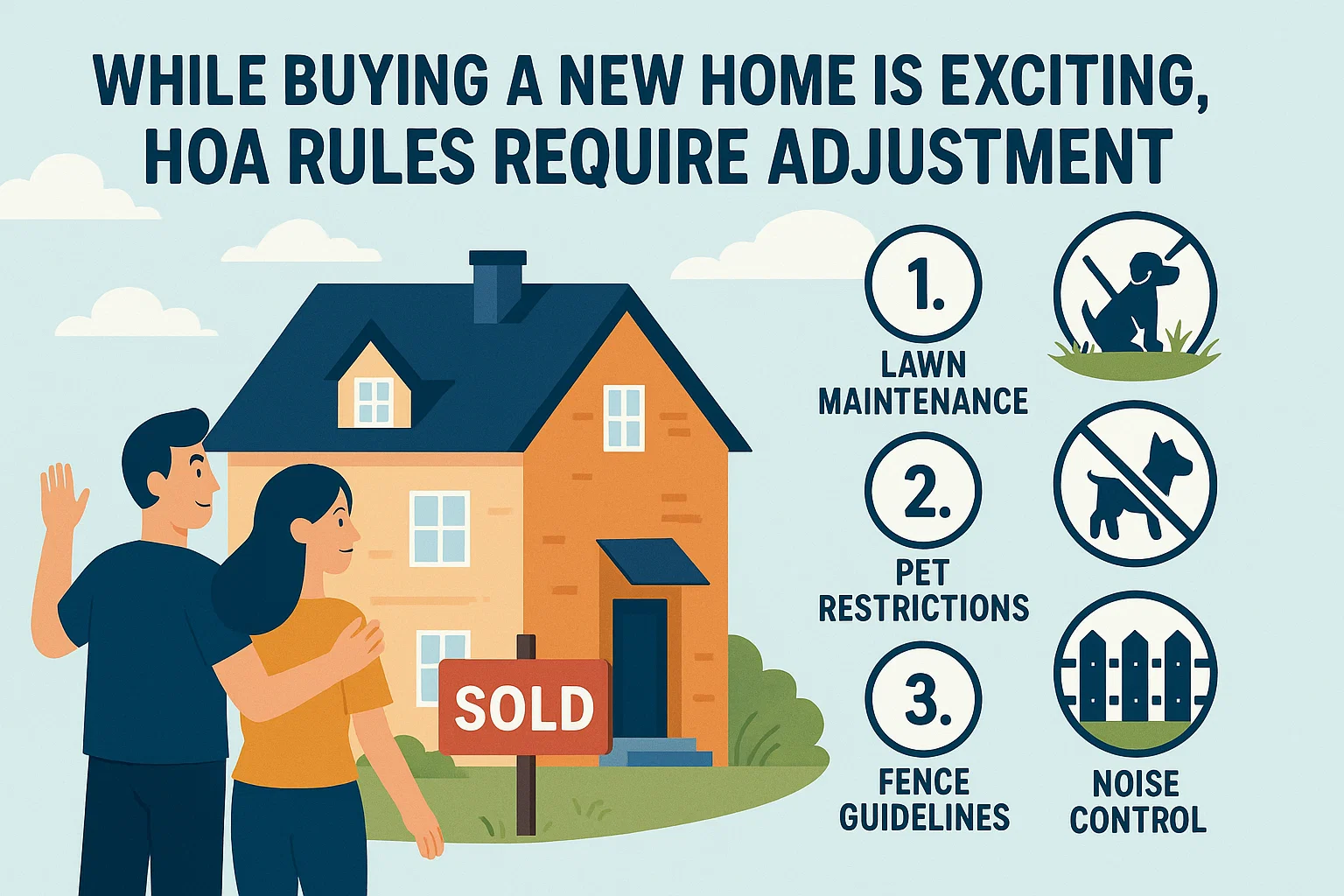
Common mistakes new HOA owners make
Not reading the rules until there’s a violation letter
Read the declaration and rules before you close. They answer most of the questions people only ask after a fine shows up.
Making exterior changes without approval
Fences, pavers, screen enclosures, pools, paint, even mailbox and front door colors usually need architectural approval first. Get it in writing before you hire a contractor.
Ignoring pet, guest and vehicle rules
Communities can limit the number and type of pets, how long guests can stay, and where boats, trailers and commercial vehicles go. Larger households with several cars should check the parking rules carefully.
Assuming every sign is allowed
Many declarations restrict yard signs, including political and for-sale signs. Check before you put one up.
Complaining without getting involved
The board is your neighbors. Go to meetings, read the budget and join a committee. Owners who show up have real influence over dues and rules.
Gated communities: what the gate gets you
South Florida has every version of gated living: unmanned gates with a call box, transponder or app; guard-gated communities staffed around the clock or part of the day; and communities where only the amenity center is gated. Here’s the honest trade-off.
| Pros | Cons |
|---|---|
| Little or no cut-through traffic, so quieter streets where kids can ride bikes | Higher dues, especially with staffed gates, plus reserves to replace gate equipment |
| Controlled access discourages solicitors and casual trespassing | Guests, deliveries and ride-shares need passes or call-ahead, which slows things down |
| More privacy | Rules tend to be stricter |
| Often paired with resort-style amenities | A gate deters but doesn’t guarantee safety, so keep your usual precautions |
Plenty of South Florida buyers search specifically for gated communities, and that can help when you sell. Higher dues can also narrow your pool of buyers, so ask an agent to compare recent sales in gated and non-gated communities in the same area. To browse, start with our gated new construction communities. Toll Brothers’ Regency at Avenir in Palm Beach Gardens is one example of a 55+ gated and guard-gated community.
Is an HOA worth it?
For many buyers, yes. An HOA keeps streets, landscaping and shared spaces consistent, which protects property values. It gives you amenities you’d never build on your own lot. And it gives neighbors a process for disputes besides arguing over the fence.
The costs are real too: dues that tend to rise, the chance of a special assessment, rules you may not like, fines and the occasional board that runs things poorly. If you’d rather skip one or both, browse communities with no HOA or no CDD, or see all HOA communities to compare amenities.
South Florida notes
- CDDs are most common in large master-planned communities, including many on the Treasure Coast around Port St. Lucie. Smaller infill communities in Broward County are less likely to have one, but always check.
- Miami-Dade has its own extra line items. The county runs special taxing districts for things like street lighting and landscape maintenance in many neighborhoods, and those charges appear on the tax bill separately from any CDD. Look at the full bill for any home in Miami-Dade County.
- Insurance costs drive dues. Rising property insurance premiums have pushed up many association budgets, especially in condo and townhome communities that insure buildings.
- Know the storm rules. Check how early shutters can go up before a storm and how soon they have to come down after.
Frequently asked questions
HOA vs. CDD: what’s the difference in Florida?
An HOA is a private association that maintains common areas and enforces community rules, paid through dues. A CDD is a special-purpose local government that financed infrastructure with bonds and collects assessments on your property tax bill to repay them and maintain what it owns.
Are CDD fees part of my property taxes?
They’re collected on the same annual tax bill as non-ad valorem assessments, so you pay them alongside your property taxes, usually through escrow. The homestead exemption does not reduce them.
Can I pay off my CDD?
Often, yes. Many districts let you prepay the debt portion of your assessment, after which you pay only the yearly maintenance portion. Ask the district manager for a payoff amount.
Can a Florida HOA stop me from renting my home?
If leasing limits are in the declaration when you buy, they apply to you. Most new rental restrictions adopted later apply only to owners who buy afterward or who agreed to them, with exceptions for limits on leases shorter than six months or more than three rentals a year.
Are gated communities safer?
Gates cut through-traffic and casual access, which many residents value. They don’t guarantee safety, and staffed gates add meaningfully to dues.
How do I find a community’s HOA and CDD fees before I buy?
Ask for the HOA disclosure summary, the current budget and the CDD assessment for your specific lot. For a resale, look up the parcel on the county tax collector’s website, and get an estoppel certificate before closing.
Keep reading
HOA and CDD costs are one piece of the bigger new construction vs. resale comparison. If you’re weighing an age-restricted community, see our guide to 55+ active adult communities, and don’t skip the homeowners insurance quote before you commit.
Written by David, a licensed real estate agent with 20 years in the business. Updated November 2026.