Condo vs. Townhouse vs. Single-Family Home in South Florida
First-time buyers, young families, downsizers and investors all end up asking the same question in South Florida: condo, townhouse or single-family home? Prices push a lot of buyers toward attached homes, and builders have answered with a wave of new townhome communities. But the three types differ in more than size. What you own, how you insure it, what you pay each month, how you finance it and what the rules allow can all change with the home type.
This guide compares condos, townhouses and single-family homes side by side, explains why townhomes have become so popular here, and helps you figure out which one fits your budget and your life.
Quick definitions
- Condo: You own your unit’s interior and a share of the building and common areas. Neighbors can be beside, above and below you, and a condominium association maintains and insures the building.
- Townhouse: An attached home in a row, usually two stories, sharing one or two side walls but with no one above or below. It can be sold as fee simple, where you own the building and the land under it, or under the condominium form of ownership.
- Single-family home: A detached house on its own lot. You own and maintain the house and the land, usually with an HOA for the community’s shared areas.
Condo vs. townhouse vs. single-family at a glance
| Condo | Townhouse | Single-family home | |
|---|---|---|---|
| What you own | The unit plus a share of common elements | Fee simple: the building and land. Condo form: the unit plus a share of common elements | The house and the lot |
| Florida law | Chapter 718 (Condominium Act) | Chapter 720 (HOA Act) if fee simple, Chapter 718 if a condominium | Chapter 720 if there’s an HOA |
| Insurance | Association insures the building. You buy an HO-6 policy for the interior. | Usually an HO-3 policy for the whole building if fee simple. HO-6 if a condominium. | HO-3 policy for the whole home |
| Monthly association fees | Highest, since they cover the building, insurance and reserves | Moderate, depending on what the association maintains | Lowest, unless there are big amenities or a staffed gate |
| Exterior upkeep | The association | You or the association, depending on the declaration | You |
| Space and yard | Least space, no private yard | More space, small patio or yard | Most space and a private yard |
| Privacy and noise | Neighbors on several sides | Neighbors on one or two sides | No shared walls |
| Rules | Most restrictive | Moderate | Least restrictive, though HOAs still set exterior standards |
| Financing | The lender reviews the condo project as well as you | Standard if fee simple. Project review if a condominium. | Standard |
| Price | Usually lowest | Usually in between | Usually highest |
Ownership: the difference that drives everything else
The word “townhouse” describes how a home looks, not how you own it. In South Florida you’ll find townhome-style homes sold as condominiums, like Lennar’s Solstice in Miami, right alongside fee-simple townhome communities. The ownership type decides who insures the roof, who repairs the exterior, which Florida law applies and how lenders treat the loan. Always ask which one you’re buying and read the declaration to confirm. Our guide to pre-construction condos and townhomes covers your rights and deposit protections for each.
What each one really costs per month
Compare the full monthly cost, not the price. Add up the mortgage payment, property taxes, insurance, association dues, any CDD assessment, utilities and a maintenance budget for each option.
- Association fees. Condo dues are usually the highest because they pay for the building’s insurance, maintenance and reserves. Townhome dues depend on whether the association handles roofs, paint and landscaping. Single-family HOA dues are often the lowest. Our HOA vs. CDD guide explains what dues and CDD assessments cover.
- Insurance. A condo owner’s HO-6 policy costs less than a policy on a whole house, but part of the building’s insurance is in your dues. A fee-simple townhome or single-family owner insures the whole structure, including wind. Get quotes on the specific address. See our guide to homeowners insurance in Florida.
- Condo reserves. Since 2022, Florida has required milestone structural inspections for condo buildings three or more habitable stories tall, plus structural reserve studies, and associations can no longer waive reserves for the items those studies cover. A new building is decades from its first milestone inspection, but expect budgets that fund real reserves. Rising insurance and reserve requirements are a big reason condo dues across Florida have gone up.
- Maintenance. In a single-family home, the roof, exterior paint, lawn and repairs are all on you. In a condo, they’re shared through dues and occasional special assessments.
Financing differences
A fee-simple townhome or single-family home is financed like any house. With a condo, or a townhome sold as a condominium, the lender also reviews the project: how many units are sold, how many are investor-owned, the budget and reserves, insurance and any litigation. A project that doesn’t meet those standards may only qualify for loans with larger down payments and higher rates, which also matters when you sell. Ask the developer which loan programs the project is approved for. Our guide to financing a new construction home has more.
Space, privacy and rules
- Space. Condos are usually the smallest. Townhomes often match small single-family homes inside but have little outdoor space. Single-family homes give you a yard, room for a pool and space to expand.
- Noise. Shared walls, floors and ceilings mean more neighbor noise in condos. An end-unit townhome shares only one wall. Ask about concrete block party walls and soundproofing.
- Pets, parking and rentals. Condo and townhome associations often limit pet size and number, guest parking and rentals, including short-term rentals. If you might rent the home later, read the leasing rules before you buy.
- Changes. Exterior changes need approval in almost every community, but condo rules are usually the strictest.
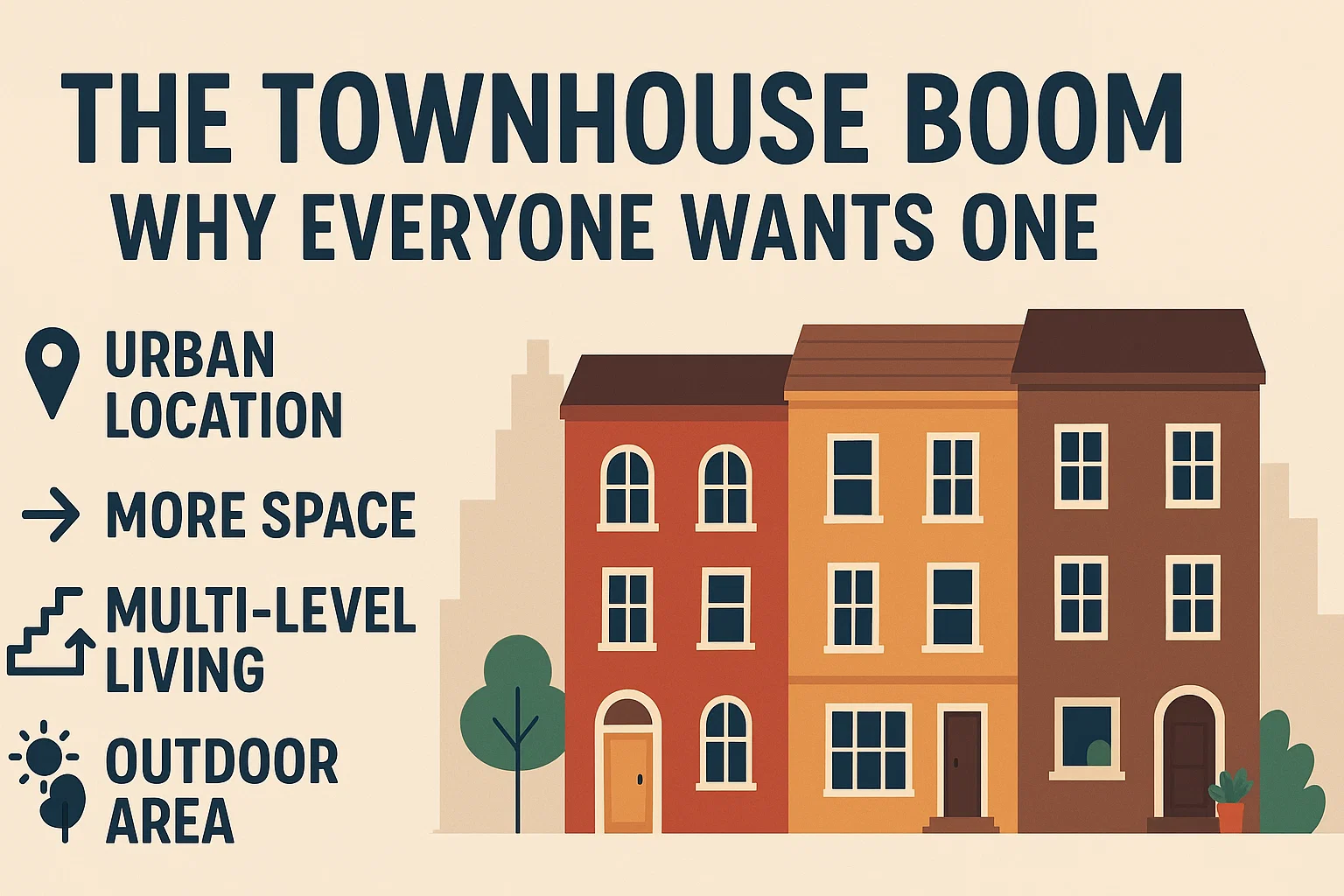
Why everyone seems to want a townhouse
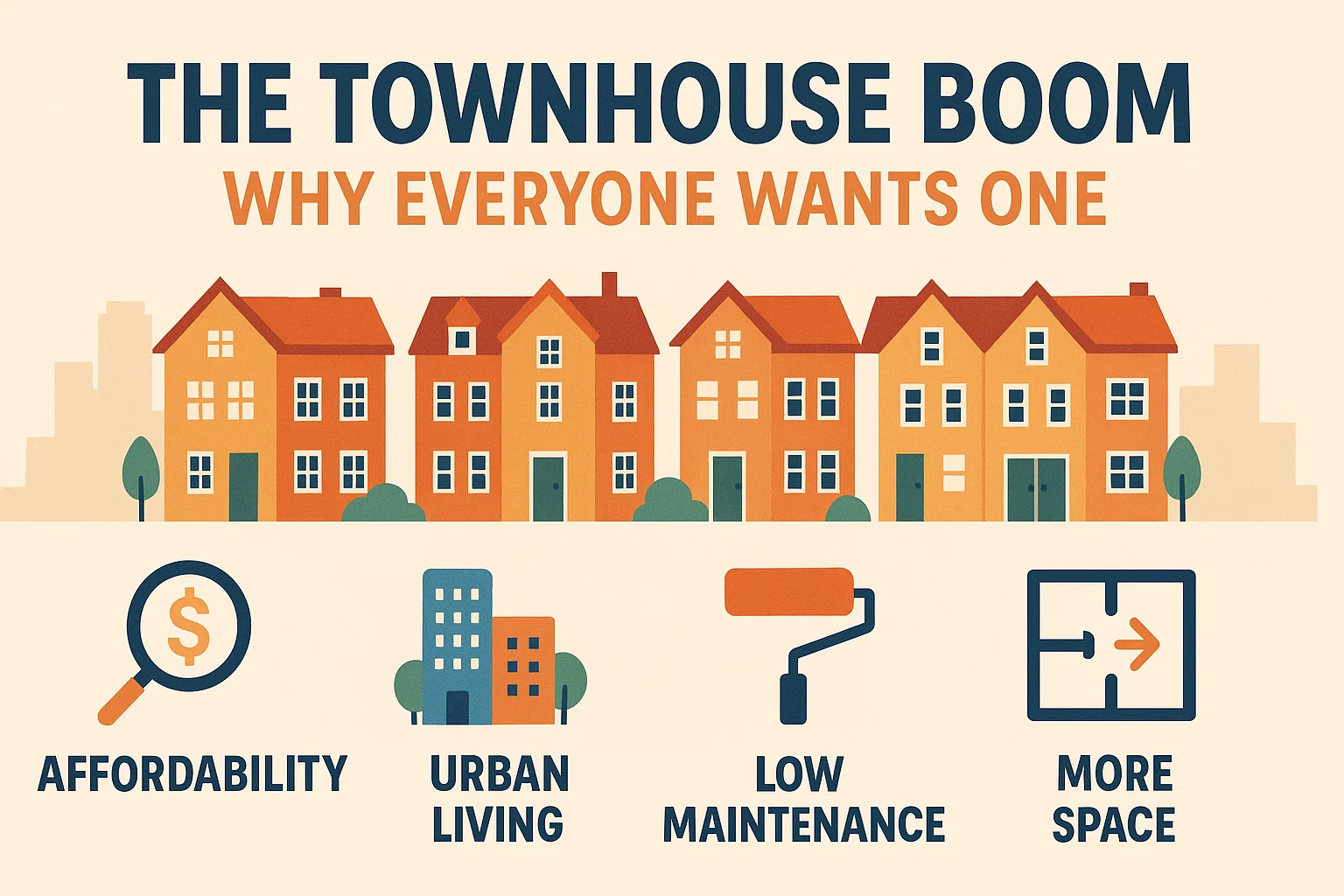
Townhomes have become one of the most popular new home types in South Florida, and for good reasons:
- Price. A new townhome usually costs less than a comparable single-family home in the same area because it uses less land.
- Location. With little vacant land left in Broward and much of Miami-Dade, builders use townhomes to put new homes closer in, nearer jobs, beaches and city centers.
- Lower upkeep. Small yards, and in many communities association-handled landscaping or exteriors, mean less work than a house.
- Ownership. Compared with a condo, a fee-simple townhome gives you your own building and land, often with lower dues and fewer rules.
They appeal to first-time buyers, couples, empty nesters and investors alike. The trade-offs are stairs, limited outdoor space and neighbors on one or both sides.
Which one fits you?
A condo may fit if you
- Want the lowest purchase price or an urban, walkable location.
- Want almost no maintenance and like having amenities and security.
- Travel often, or are buying a second home or a first home for one or two people.
A townhouse may fit if you
- Want more space than a condo without the cost and upkeep of a house.
- Want to own your building and land, with fewer rules than a condo.
- Are a first-time buyer, a small family or downsizing, and don’t mind stairs.
A single-family home may fit if you
- Need more bedrooms, a yard, room for a pool or space for a growing or multigenerational household.
- Want the most privacy and control over your home.
- Are comfortable handling maintenance and insuring the whole structure.
Where to find each type in South Florida
- Townhomes: Browse new construction townhomes in Miami-Dade, Broward, Palm Beach County and St. Lucie County. Examples include Pulte Homes’ Coral Edge in Margate and Everton in Lantana.
- Single-family homes: Start with new construction across South Florida, or see new construction homes under $400K if you’re comparing prices with townhomes.
- Condos and condo-style townhomes: See Solstice in Miami, and read our pre-construction condo guide before you sign.
Questions to ask before you buy
- Is this home a condominium, a fee-simple townhome or a single-family home with an HOA?
- What do the monthly association dues cover, and is there a CDD?
- Who insures the roof and exterior, and what does a quote on this address cost?
- Who maintains the roof, exterior paint and landscaping?
- What are the rules on pets, parking, rentals and exterior changes?
- For a condo, which loan programs is the project approved for, and what do the reserves look like?
- For attached homes, how are the shared walls built for sound and fire protection?
Frequently asked questions
What’s the difference between a condo and a townhouse?
A condo owner owns the unit’s interior and shares ownership of the building, and may have neighbors above and below. A townhouse is an attached home with no one above or below, and in a fee-simple townhome you own the building and the land under it. Some townhomes are sold as condominiums, so check the declaration.
Is a townhouse cheaper than a single-family home?
Usually, in the same area, because it uses less land. Compare the full monthly cost, including dues and insurance, not just the price.
Are condo fees higher than HOA fees?
Usually, because condo dues pay for the building’s insurance, maintenance and reserves. HOA dues for townhomes and single-family homes generally cover only shared areas and amenities.
Is a condo a good starter home?
It can be, especially for one or two people who want a lower price and little maintenance. Check the association’s finances, reserves and loan approvals before you buy.
Do townhomes hold their value?
Value depends mostly on location, condition and local supply. Fee-simple townhomes in good locations tend to appeal to a wide range of buyers, which helps when you sell.
Keep reading
Whichever type you choose, compare it with a resale using our new construction vs. resale guide, then see how to choose a home builder. Find more guides in Buying New Construction.
Written by David, a licensed real estate agent with 20 years in the business. Updated November 2026.