How to Buy New Construction in South Florida: From Contract to Closing
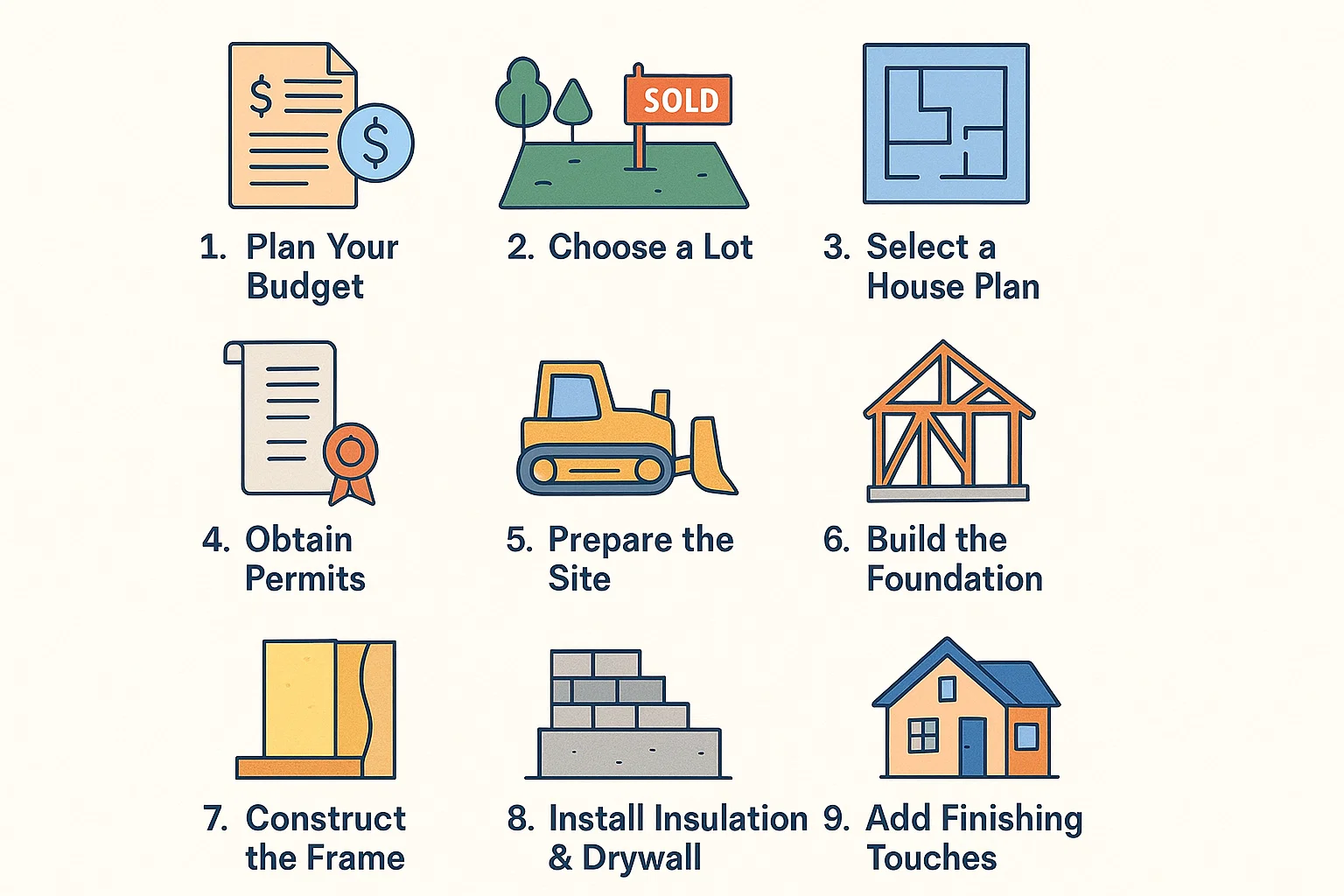
Buying a new construction home in South Florida doesn’t follow the same script as buying a resale. There’s no seller moving out and no 30-day close. Instead you pick a community, a floor plan and a lot, sign a builder’s contract, make your selections, and then wait while the home goes up. Depending on the builder and the stage of the community, that can take anywhere from a few weeks for a finished home to a year or more for one that hasn’t broken ground.
I’ve walked a lot of buyers through this process, and the ones who enjoy it most are the ones who know what’s coming. This guide covers every step from your first model home visit to the day you get your keys, plus what happens after closing.
The new construction process at a glance
| Stage | What happens | Typical timing |
|---|---|---|
| 1. Shop and tour | Compare communities, builders and floor plans. Tour model homes with your agent. | A few weeks |
| 2. Contract | Choose a lot and plan, sign the purchase agreement and pay your deposit. | Day one |
| 3. Financing | Apply for your mortgage and confirm how your rate lock will work. | Within days of signing |
| 4. Design center | Choose structural options, then finishes, by the builder’s deadlines. | First few weeks |
| 5. Permits and site work | The builder pulls permits, prepares the lot and pours the slab. | One to three months |
| 6. Construction | Walls, roof, windows, systems, drywall and finishes, with inspections along the way. | Roughly four to eight months |
| 7. Final inspections | The building department signs off and issues a certificate of occupancy. | Last few weeks |
| 8. Walkthrough and closing | Tour the finished home, list fixes, sign your loan documents and get your keys. | Final one to two weeks |
| 9. Warranty | Report problems in writing and schedule warranty repairs. | First year and beyond |
Those times are typical for production builders here, not promises. Your contract’s estimated completion date is the number to plan around, and even that can move.
Step 1: Shop smart and tour model homes
Start by narrowing down where you want to live and what you can spend, then compare the builders active in that area. Our guide to choosing a home builder covers how to check a builder’s track record before you fall for a model.
Bring your agent to your first visit, or have them call ahead. Many builders only pay a buyer’s agent who registers you on that first visit, and the sales consultant in the model works for the builder. A few more tips for touring:
- Limit yourself to two or three communities a day. After that, the homes blur together.
- Look at the structure, not the styling. Models are loaded with upgrades and furniture. Ask for the standard features list and, if possible, walk an unfurnished or quick move-in version of the same plan.
- Measure and photograph. Bring a tape measure for the rooms where your furniture has to fit, and take photos of anything you want to ask about later.
- Ask about the whole community. How many homes and phases are planned? What will be built on the empty parcels nearby? What are the HOA dues and is there a CDD?
Step 2: Decide between a to-be-built home and a quick move-in
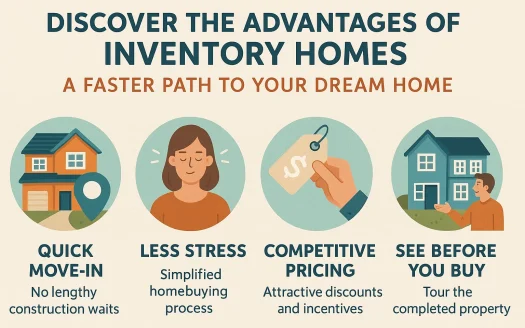
A to-be-built home lets you pick the lot, plan and finishes, but you’ll wait for construction. A quick move-in home is already finished or close to it, so you can usually close in weeks, but the selections are already made. If you have a lease ending or a home to sell, a quick move-in can save months. Our quick move-in homes guide explains the trade-offs.
Step 3: Read the purchase agreement before you sign
Builder contracts are written by the builder’s attorneys, and they’re long. These are the sections I always have buyers read closely:
- Deposit. How much, when it’s due and where it’s held. Florida’s deposit statute sets escrow rules for deposits up to 10% of the price on a new single-family or two-family home, but buyers can waive that protection in writing, and some contracts include the waiver. Look for it.
- Completion dates. The estimated completion date, any outside date after which you can cancel, and the delay clauses (hurricanes, materials, permits) that can push both dates out.
- Financing and appraisal terms. Some builder contracts give you very little time to get loan approval, and many don’t let you cancel if the appraisal comes in low. Know what happens to your deposit if your loan falls through.
- Closing costs. Some builder contracts shift costs to the buyer that a resale seller would normally pay, such as the documentary stamp tax on the deed or the owner’s title policy. Ask for an estimate in writing.
- Lender and title incentives. Incentives tied to the builder’s affiliated lender or title company are common and can be worth taking. Federal law doesn’t allow a seller to require you to buy title insurance from a particular company as a condition of the sale, so you have a choice.
- HOA and CDD disclosures. The builder must disclose a Community Development District in bold type in your contract. If you’re buying in an HOA community and didn’t get the disclosure summary before signing, you can cancel within three days of receiving it or before closing, whichever comes first. Our HOA vs. CDD guide explains both.
- Disputes and warranty. Many contracts require arbitration or mediation, and most attach the builder’s warranty. Read both now, not when something breaks.
Step 4: Line up your financing
Get pre-approved before you sign so you know you qualify, then apply with your chosen lender right after the contract. Get a Loan Estimate from the builder’s lender and at least one outside lender, and compare the totals with any incentives included. Our guide to financing a new construction home walks through it.
Timing is the tricky part. Standard rate locks run 30 to 60 days, and a to-be-built home takes longer than that, so ask about extended locks, float-downs and builder-paid buydowns. Our rate lock and buydown guide explains the options. Until you close, don’t change jobs, open new credit or make large purchases. Your lender will check again before closing.
Step 5: Make your design center selections
Soon after signing, you’ll schedule your design center appointments. Builders usually set two deadlines: one for structural options like an extended lanai or an extra bedroom, often within days or a few weeks of contract, and a later one for finishes. Miss them and you may lose the option or pay a change fee. Our guide to homesite premiums and design center upgrades covers what’s worth choosing now and what can wait.
Step 6: Construction, stage by stage
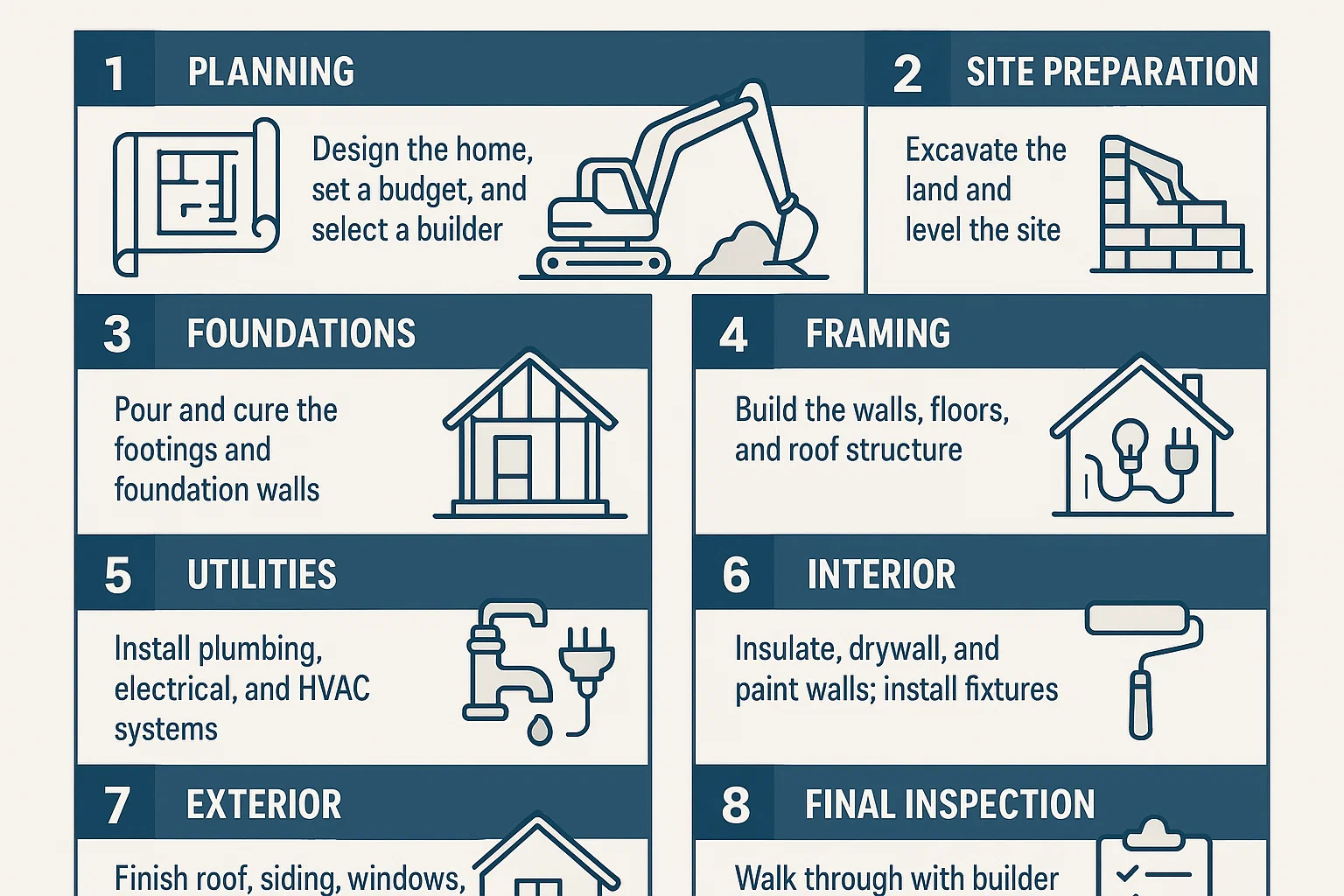
Here’s what a typical production home in South Florida goes through, and where the inspections happen. Your city or county building department inspects at each key stage, and nothing moves forward until each inspection passes.
- Permits and site work. The builder pulls permits, clears and grades the lot, treats the soil for termites and sets the under-slab plumbing. The plumbing and slab preparation are inspected before concrete is poured.
- Slab and walls. Most South Florida homes sit on a concrete slab. The first floor is usually concrete block with a poured tie beam, and second floors are often block or wood framing.
- Roof and dry-in. Trusses go up, the roof deck is nailed and inspected, and the roof, windows and exterior doors seal the house. Expect impact-rated windows and doors or approved shutters, since much of the region falls under strict wind-load rules.
- Rough plumbing, electrical and air conditioning. Pipes, wiring and ductwork go in, followed by separate inspections for each.
- Insulation and drywall. Once the rough inspections pass, insulation goes in, then drywall is hung, taped and finished.
- Interior and exterior finishes. Cabinets, trim, paint, tile and flooring go in inside. Outside, the stucco is finished and painted, and the driveway, walkways, sod and landscaping are installed.
- Final inspections. The building department checks the finished home and issues a certificate of occupancy. The utility sets the meters, and the builder schedules your walkthrough.
Why South Florida timelines slip
- Permitting. Review times vary a lot from one city or county to the next.
- Weather. Hurricane season runs June 1 through November 30, and summer afternoon storms stop roof and exterior work almost daily.
- Labor and materials. When crews or specific materials are scarce, everything waits.
- Inspections and utilities. A failed inspection or a slow meter set can add weeks at the end.
Ask your builder for updates at each major stage, and don’t give notice on a lease or schedule movers until the builder gives you a firm closing date.
Visiting the site and hiring your own inspector
Most builders limit site visits for safety and ask you to schedule them. Many offer a pre-drywall meeting where you can see the wiring and plumbing before the walls close. That’s also the best time for an independent inspector, followed by a second inspection before closing. Ask the builder in writing whether outside inspectors are allowed and when. Our guide to home inspections explains what they look for.
Step 7: The final walkthrough
About one to two weeks before closing, the builder walks you through the finished home, shows you how the systems work and records anything that needs fixing. Take your time. Bring blue painter’s tape, your inspector’s report and a phone for photos, and check:
- Paint, drywall, tile, grout, flooring and countertops for chips, cracks and stains.
- Every door, window, lock and cabinet for smooth operation.
- Every faucet, toilet, shower and appliance, and the water heater.
- The air conditioning, thermostat, outlets, switches and light fixtures.
- Grading and drainage away from the house, the driveway, sod and irrigation.
- That your design center selections match what was installed.
Get the punch list in writing, with a date for each repair, before you close.
Step 8: Closing day
Your lender must give you a Closing Disclosure at least three business days before closing. Compare it with your Loan Estimate and ask about anything that changed. Confirm wiring instructions by phone with your title company using a number you already know, since wire fraud targets closings. At closing you’ll sign the loan and title documents and get your keys, garage remotes and warranty paperwork.
Then file for your homestead exemption. You need to own and live in the home on January 1 and file by March 1 of that year. Our guide to homestead and property tax benefits explains the larger exemption Florida voters approved in November 2026.
After closing: use your warranty
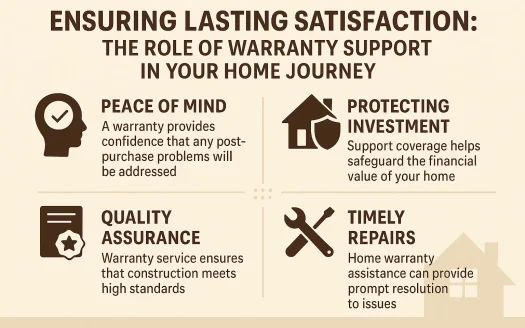
Most builders back new homes with a tiered warranty, commonly one year on workmanship and materials, two years on major systems and ten years on structural components. Submit every request in writing and keep copies. Schedule an independent inspection around month eleven so you can report problems before the first year ends. If a serious defect shows up later, Florida’s Chapter 558 sets out a notice-and-repair process that comes before any construction defect lawsuit. Our new home warranty guide has more.
Contract-to-closing checklist
- Register your agent on your first model home visit.
- Get pre-approved before you sign.
- Read the deposit, completion date, financing, closing cost and dispute sections of the contract.
- Confirm the HOA dues and any CDD assessment for your lot.
- Compare Loan Estimates and decide how you’ll handle your rate lock.
- Meet every design center deadline and get your selections in writing.
- Schedule an independent inspection before drywall and before closing.
- Do the walkthrough slowly and get the punch list in writing.
- Review your Closing Disclosure and confirm wiring instructions by phone.
- File for homestead and calendar your eleven-month warranty inspection.
Frequently asked questions
How long does it take to buy a new construction home in South Florida?
A quick move-in home can close in a few weeks. A to-be-built production home commonly takes six months to a year from contract to keys, and longer in early phases of a new community.
How much is the deposit on a new construction home?
It varies by builder and price point, and some builders ask for more once you choose upgrades. Ask how much is due at contract and later, where it’s held, and whether the contract waives Florida’s escrow protection.
Can I use my own lender and title company?
Yes. Builders often offer incentives for using their affiliated lender or title company, which can be worth it, but compare the full cost first.
Do I need a home inspection on a brand-new home?
Yes. City and county inspections check code compliance, not workmanship. An independent inspector before drywall and before closing catches problems while the builder still has to fix them.
What happens if the builder misses the completion date?
Your contract controls. Most allow delays for weather and supply problems, and many set an outside date after which you can cancel and get your deposit back. Know both dates before you sign.
Keep reading
Still comparing options? Start with new construction vs. resale, then see more guides in Buying New Construction. When you’re ready to look, browse new homes in Miami-Dade, Broward, Palm Beach and Port St. Lucie, or start with builders like Lennar and D.R. Horton.
Written by David, a licensed real estate agent with 20 years in the business. Updated November 2026.